The Cloud Is Becoming One Big Sandbox
Vercel's sandbox push—Docker support, persistent state, and real-world case studies—signals a shift where the cloud stops being infrastructure and starts being a runtime environment you can think inside.
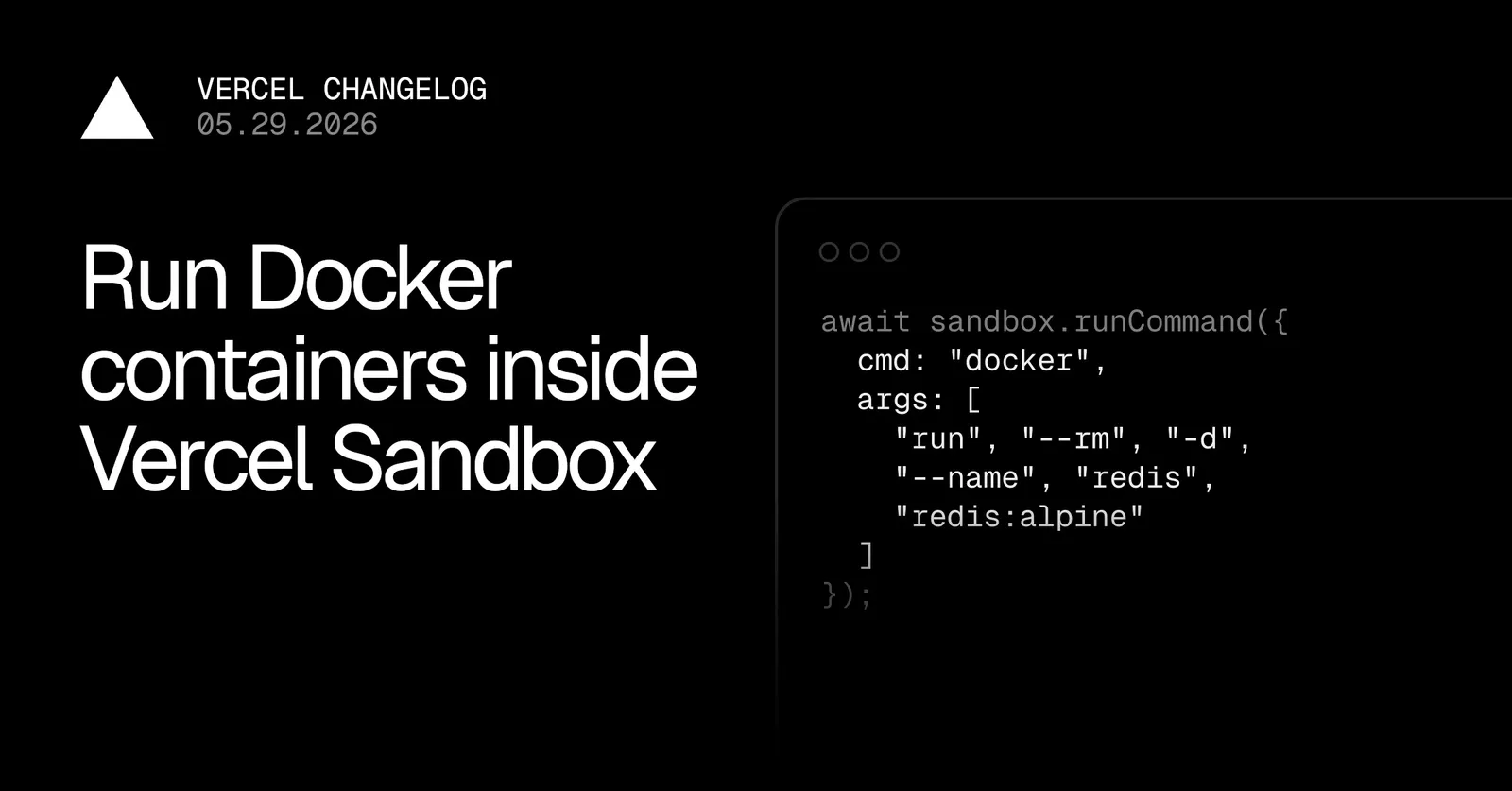
Vercel shipped a lot this cycle, but the sandbox announcements are the thread worth pulling. Docker containers inside Vercel Sandbox. Port 8080 now available. Sandbox persistence hitting general availability. Conductor moving parallel coding agents off developer laptops and into the cloud using the same stack.
That last one is the tell. Conductor isn't a hobbyist project—it's running multiple agents in parallel, in the cloud, coordinated through Vercel's infrastructure. That's not a deployment story. That's a compute story.
What's happening is that the line between "where you develop" and "where you deploy" is collapsing. Sandboxes used to be throwaway environments—spin one up, test something, tear it down. Persistent sandboxes change that contract entirely. Now a sandbox can hold state, run long-horizon tasks, and behave more like a live system than a scratchpad.
For studios and product teams, this matters because AI workloads don't fit neatly into the request-response model that most serverless infrastructure was built around. Agents need to run, wait, retry, and remember. Sandboxes with persistence are one answer to that problem.
The billing change—function invocations now billed per unit rather than per execution time—sits alongside this shift. It suggests Vercel is pricing for a new kind of workload: many short, discrete calls rather than a few long-running processes. Architecture follows incentives. Teams will build accordingly.
Sources
- Run Docker containers inside Vercel Sandbox Vercel blog
- Port 8080 is now available in Vercel Sandboxes Vercel blog
- How Conductor moved parallel coding agents from the laptop to the cloud with Vercel Sandbox Vercel blog
- Sandbox persistence is now GA Vercel blog
- Function invocations now billed per unit Vercel blog