SEO vs GEO: What Generative Engine Optimization Actually Is, and What Actually Changed
SEO gets you ranked and clicked. GEO gets you retrieved, quoted, and cited inside an answer a machine writes. Around eighty per cent of the work is identical, which is exactly why the twenty per cent that differs is where most 2026 budgets are being wasted. The definitions, the numbers, the six things that genuinely changed, and how to tell which one your business actually needs.
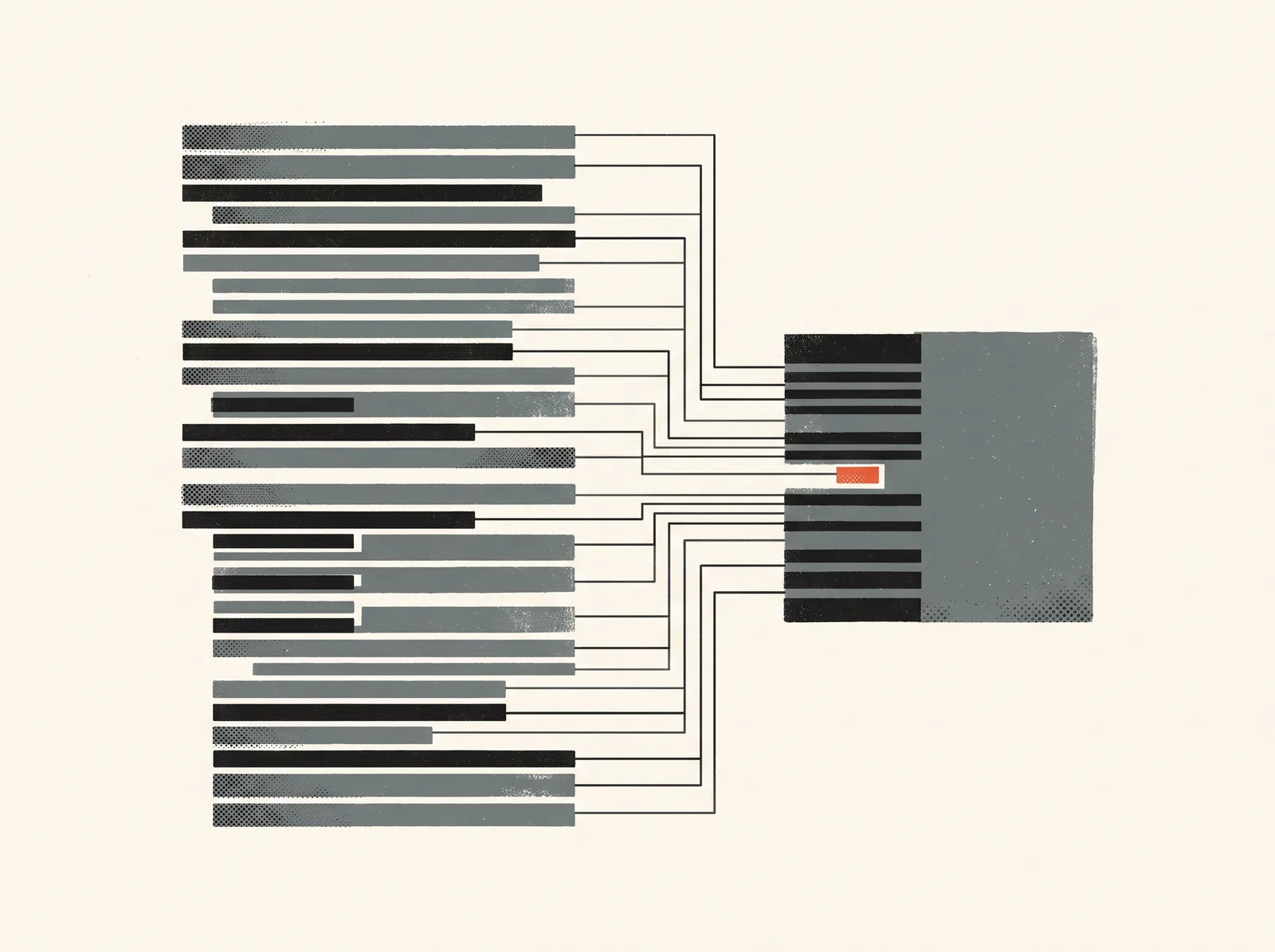
SEO is the practice of getting a page ranked in a list of links so a human clicks it. GEO, generative engine optimization, is the practice of getting your content retrieved, quoted, and cited inside an answer that a machine writes for the user. One competes for a position. The other competes for a sentence.
Roughly eighty per cent of the work behind the two is the same work. The remaining twenty per cent is real, it is measurable, and it is where most of the money being spent on "AI SEO" in 2026 is being wasted. This article is the honest version of the distinction, from a studio that does both for clients and has run the experiment on its own products.
The short answer
SEO optimizes a page so a search engine ranks it and a person clicks through. Success is a position, then a session.
GEO optimizes content and entity so a generative engine, ChatGPT, Google AI Overviews and AI Mode, Perplexity, Claude, Copilot, retrieves your page, uses it, and names you as the source. Success is being inside the answer, whether or not anyone clicks.
That is the entire difference in two sentences. The rest of this article is what follows from it, because the consequences are less obvious than the definition.
The terminology mess, cleared up
Four terms are circulating for approximately one job.
- GEO, generative engine optimization. Coined in the Princeton-led GEO paper presented at ACM SIGKDD in 2024, the first controlled study showing content could be deliberately optimized for visibility in generated answers.
- AEO, answer engine optimization. Older, originally about featured snippets and voice answers, now used interchangeably with GEO by most vendors.
- LLMO or AI SEO. Marketing coinages. No separate body of research behind either.
- SEO. The parent discipline all of the above sit inside.
Google settled the argument in its own words. When it published its guide to optimizing for generative AI features in May 2026, the position was that AEO and GEO are still SEO, that its generative features run on the same core ranking and quality systems, and that no special file, no AI-specific rewrite, and no separate schema is required to appear in them.
Treat GEO as a layer on top of a working SEO program, not a replacement for one, and not a separate line item with a separate vendor. Anyone selling it as a parallel discipline is selling you a second invoice for overlapping work.
What actually changed, with numbers
The shift is real even though the framing is oversold.
Answers now sit above the links. AI Overviews appear on roughly 48% of Google queries, up from around 13% in early 2025. In India the rate of searches showing an AI Overview runs about 16.5%, among the highest in the world alongside Brazil.
A very large audience moved. ChatGPT crossed 100 million weekly active users in India in early 2026, making the country OpenAI's second-largest market and roughly a tenth of global traffic. Users under 30 account for about 80% of Indian usage. If your buyer is under 35 and urban, a meaningful share of their research now happens in a chat window, not a results page.
Clicks compressed. Gartner projects a 30% drop in traditional search volume through the end of 2026. Click-through on positions one to three is down sharply year on year, because the answer arrives before the link does.
But the base did not move. Traditional search still delivers on the order of hundreds of times more total traffic than every AI engine combined, and outbound referrals from ChatGPT to the open web, while growing fast, remain small in absolute terms. Semrush's analysis of ChatGPT traffic shows the growth curve clearly and the volume just as clearly.
Both facts are true at once. AI answers are eating the top of the funnel. Organic search is still the funnel. A strategy that abandons one for the other is wrong in both directions.
What stays exactly the same
Before the differences, the boring part, which is most of it.
A generative engine cannot cite a page it cannot fetch. It cannot fetch a page blocked by your firewall, hidden behind JavaScript that never renders for a bot, buried in an unindexed subfolder, or throttled to a 403 by a bot-protection rule nobody has reviewed since it was switched on.
So the foundation is unchanged: crawlable pages, clean information architecture, fast rendering, honest titles, real internal links, content that answers a real question, and enough third-party trust that a machine believes you. Google says this in its own guide, and the same fundamentals apply to engines that are not Google.
If your site fails these, GEO is not your problem. Your website is your problem, which is a different and cheaper thing to fix.
The six things that genuinely differ
1. The unit of competition is the passage, not the page
Search ranks documents. Generative engines retrieve chunks and stitch them into an answer. A 2,000-word essay written as one continuous argument gets one chance to be quoted. The same 2,000 words written as fifteen self-contained answers gets fifteen.
This is the single largest practical change to how content gets written, and it is a structural change, not a keyword change.
2. Ranking becomes retrieval plus synthesis
Google's own description of its generative features includes query fan-out: one user question becomes many internal searches, whose results are synthesized into one answer. You are not competing for a position on one query. You are competing to be a useful source for a cloud of related sub-queries you never see.
That is why breadth of genuinely useful coverage beats one heavily optimized page.
3. Mentions matter more than links
Backlinks still help, mostly by getting you indexed and trusted. But 2026 correlation studies keep finding the same thing: brand mentions across the open web correlate with AI visibility roughly three times more strongly than backlinks do, and the large majority of citations in AI answers point at earned media rather than the brand's own domain. DigitalApplied's 2026 citation-factor analysis puts earned media at around 84% of citations.
A machine deciding whether to name you is doing something closer to reputation triangulation than link counting. It wants several independent sources saying the same thing about you.
4. Position becomes share of voice, and it is non-deterministic
Rank one is rank one for everybody. An AI answer is generated fresh, varies by phrasing, by user, by session, and by day. There is no position to hold.
The measurable equivalent is share of voice: across a fixed panel of, say, forty prompts your buyers would plausibly type, how often are you named, and what is said about you. That is trackable. A single screenshot of ChatGPT mentioning your brand is not evidence of anything.
5. Freshness carries a premium
Cited pages skew noticeably newer than the organic top ten, on the order of 25% fresher in 2026 analyses, and visibility for a given piece tends to decay within weeks without an update. Search rewards durable pages. Generative engines reward recently confirmed ones.
Practically: a page with a visible last-updated date and refreshed numbers outperforms the same page left alone for a year.
6. The click stops being the outcome
This is the hardest one for anyone who has managed a traffic target. A large share of AI answers end the journey. The user got what they needed and never visited you.
What survives is quality over quantity. Semrush's 2026 data puts AI-referred visitors converting at several times the rate of standard organic, and Similarweb's measurements put ChatGPT referral conversion around 7%, close to paid search and well above non-branded organic. Those visitors arrive pre-qualified, because the machine already answered the research questions before sending them.
Fewer visits, better visits. If your reporting only counts sessions, this shift looks like a decline while your pipeline improves.

Who this actually matters for
Being straight about it, because not every business needs to think about this in 2026.
It matters most if your buyer researches before purchase, your category has comparison and "best X for Y" queries, your deal size justifies a research phase, or you sell to people who default to a chat window: B2B services, software, healthcare, education, finance, professional services, considered D2C purchases.
It matters less if demand is impulse, local, or visual: a neighbourhood restaurant, a salon, a walk-in retail store. Your battle is Google Business Profile, Maps, delivery-app placement, and Instagram. An AI Overview is not what decides where someone eats tonight. We would rather tell a client that than sell them a GEO retainer they do not need.
It matters immediately, regardless of category, if the models are already saying something wrong about you. Ask ChatGPT, Gemini, and Perplexity what your company does, when it was founded, and what it costs. If the answers are wrong, contradictory, or blank, that is a live problem in every category, because the confident wrong answer is what your buyer sees.
The twenty-minute version you can run today
No tools, no vendor.
- Write down ten questions a real buyer would type before choosing you. Not keywords, questions.
- Ask all ten to ChatGPT, Google AI Mode, and Perplexity. Record who gets named and which pages get cited.
- Ask each engine directly: "What is [your company]?" Check the founding year, the services, the location, the pricing claim.
- Run
curl -A "GPTBot/1.0" https://yoursite.com/and the same forClaudeBot/1.0andPerplexityBot/1.0. Anything other than your actual HTML means the crawlers are being blocked before any of this is relevant. - Check whether your site is verified and indexed in Bing Webmaster Tools. ChatGPT's live retrieval leans on Bing's index, and most Indian businesses have never opened the tool.
That gives you a baseline, a list of competitors who are already inside the answers, and a fair idea of whether your problem is content, entity, or plumbing.
The rest of this series covers what to do about it: how to rank in ChatGPT and other AI search engines for the work itself, how to measure AI visibility for turning that twenty-minute check into something you can track monthly, do you need an llms.txt file for the most oversold deliverable in the category, and the mistakes and fake vendors to avoid before you sign anything.
What it costs, honestly
In the Indian market, in mid-2026, three shapes are being sold.
A one-time audit and fix, roughly ₹75,000 to ₹3 lakh plus GST. Crawler access, structure, schema, entity cleanup across external profiles, a measurement baseline. Correct starting point for most businesses.
An ongoing content and visibility program, roughly ₹1 lakh to ₹4 lakh a month plus GST at agency grade, and it should be one program covering search and AI answers together, not two.
A dashboard subscription, ₹5,000 to ₹40,000 a month, that tracks mentions and does no work. Useful as instrumentation, worthless as a strategy, and frequently sold as one.
The number that matters more than any of these is what you already spend on content that nobody reads. Most GEO budgets in India would be better funded by cancelling that.
The one-sentence version
SEO is how you get found. GEO is how you get quoted. In 2026 you need both, they run off the same foundation, and the businesses winning at the second are almost always the ones who did the first properly first.
We build this into websites as one program rather than two: structure, schema, entity consistency, and measurement, alongside the design and build. That approach is documented on our LLM citation page, including the case where our own product was cited by ChatGPT two days after launch with zero ad spend. If you want the same treatment on your site, start a scope or read how we approach website engagements.
FAQ
What does GEO stand for in marketing?
GEO stands for generative engine optimization: optimizing content so generative AI systems like ChatGPT, Google AI Overviews, Perplexity, and Claude retrieve it, use it, and cite it in the answers they write. The term comes from a 2024 Princeton-led research paper, not from an agency.
Is GEO replacing SEO?
No. Google's own May 2026 guidance is that its generative features run on the same core ranking and quality systems as search, and that AEO and GEO are still SEO. Traditional search still delivers vastly more total traffic than all AI engines combined. GEO is a layer on a working SEO foundation, not a replacement for one.
What is the difference between GEO, AEO, and LLMO?
GEO comes from academic research and refers to visibility inside generated answers. AEO is the older term for optimizing to be the direct answer, originally for featured snippets and voice. LLMO and "AI SEO" are marketing labels for the same work. In practice the tasks overlap almost entirely, so pick one word and ignore anyone charging separately for the others.
Does GEO need different content from SEO?
Same subject matter, different structure. Write question-shaped headings, answer in the first sentence under each, keep each answer self-contained in roughly 60 to 120 words, and include specific numbers and named sources. The Princeton GEO study found that adding statistics, quotations, and citations produced visibility gains in the range of 22% to 41%. Writing a separate "AI version" of a page is a mistake; rewrite the real page.
How long does GEO take to show results?
Plumbing fixes such as crawler access and indexing show up in days. Structural content changes typically show in AI answers within two to six weeks once the pages are recrawled. Entity and reputation work, which is what moves the hardest queries, takes three to six months because it depends on third-party sources accumulating.
How much does GEO cost in India?
A one-time audit and fix runs roughly ₹75,000 to ₹3 lakh plus GST. An ongoing combined search and AI visibility program runs roughly ₹1 lakh to ₹4 lakh a month plus GST at agency grade. Tool-only subscriptions cost far less and do none of the work. Be sceptical of any quote that separates GEO from SEO, because the underlying tasks are largely the same.
Can a small brand get cited over a large competitor?
Yes, more easily than in classic search. Correlation between domain authority and AI citation is weak, and a large share of AI Overview citations come from pages ranking below position five. Specific, first-hand, well-structured content from a small site regularly beats generic content from a big one. The caveat: citations concentrate heavily by topic, so pick narrow questions you can genuinely own rather than broad ones.
NOW Media is a Bangalore creative studio founded in 2019, a brand of Bleep Design Private Limited. We build websites, brands, and AI systems, and we run the citation methodology described here on our own products before selling it to anyone.
AI search and GEO
What generative engine optimization actually is, how to get retrieved and cited by ChatGPT, Gemini, Perplexity and Claude, and which tactics are a waste of money.
- How to Rank in ChatGPT, Gemini, Perplexity and Claude: The 2026 GEO Playbook
- Do You Need an llms.txt File? The Honest Answer for 2026
- How to Measure AI Visibility: Prompt Panels, Share of Voice, and What the Tools Do Not Tell You
- GEO Mistakes: 11 Things Not to Do, and How to Spot an Agency Selling You Nothing
- Building Products Designed to Be Cited by LLMs: A 2026 Playbook
- How Brandauditor.ai Hit Its First ChatGPT Citation in 2 Days (And the Exact Setup We Used)
- Brand Guidelines That AI Tools Can Actually Use (Without Breaking the System)