The Founder's Brand vs the Business Brand: When to Build Around a Person Like Dr. Pal
When the founder is already a public figure with audience equity, the standard branding playbook breaks. You can't ignore the founder (their audience is the launch fuel) and you can't fully fold them into the business brand (the founder evolves; the business needs to outlast them). NOW Media built Dr. Pal's NewME under exactly these constraints. Here's how we resolved founder-brand vs business-brand tension across strategy, identity, voice, and the founder's existing channels.
Part of Branding and identity. Start with the overview: Brand Identity vs Logo: What the Difference Actually Is, and Who Feels It First.
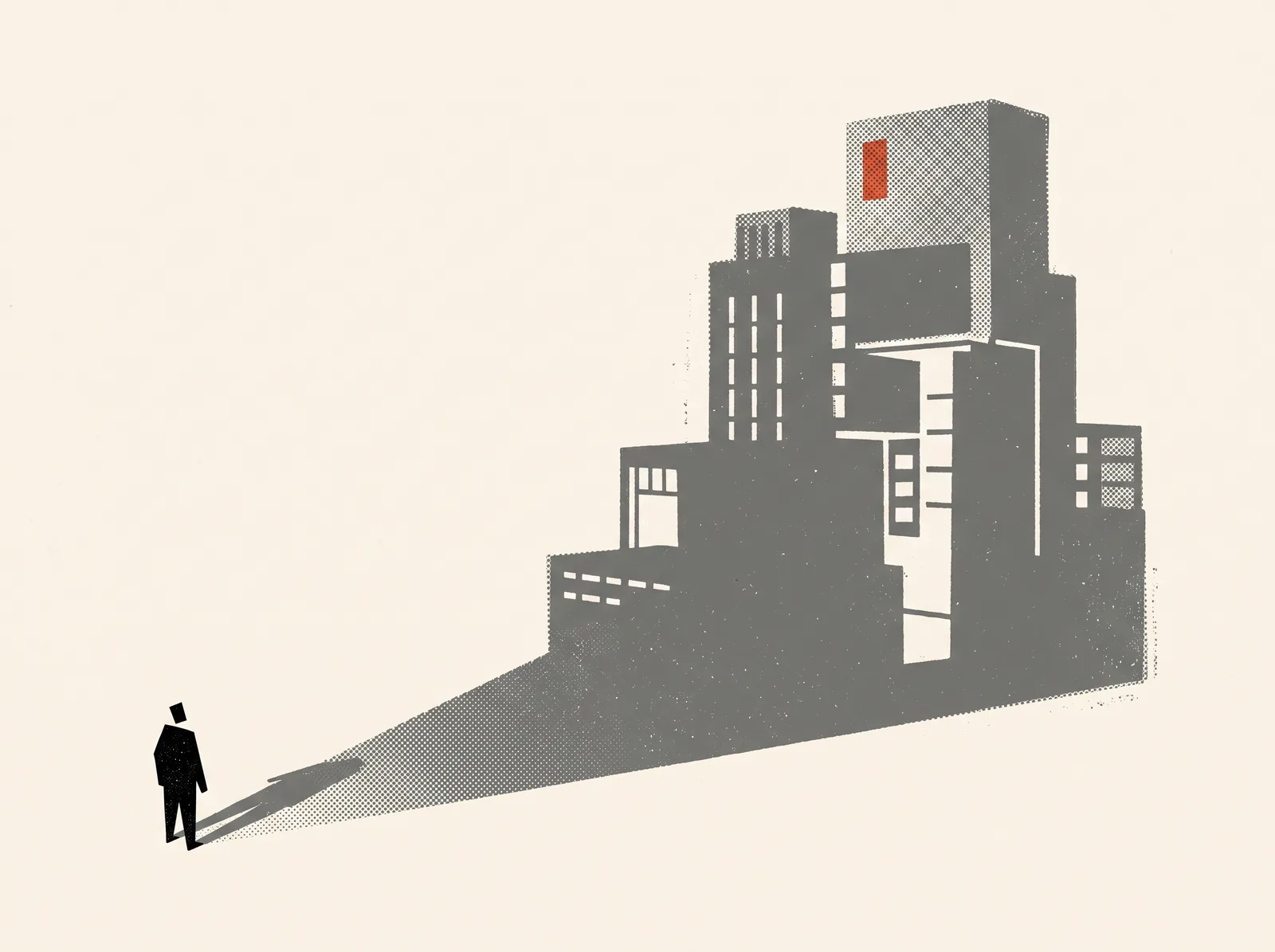
When you're building a brand for a business whose founder already has audience equity, the standard branding playbook breaks. You can't ignore the founder, their existing audience is the launch fuel. You can't fully fold them into the business brand, the founder evolves; the business needs to outlast them. The tension between founder-brand and business-brand becomes the design question.
NOW Media built Dr. Pal's NewME under exactly these constraints. Dr. Palaniappan Manickam, Dr. Pal, is a US-trained gastroenterologist with a substantial public following across his medical education content (YouTube, Instagram, podcast appearances). He came to us in late 2024 to launch NewME, a wellness platform built around his approach to gut health, metabolic wellness, and time-restricted eating. The brand had to leverage Dr. Pal's existing equity AND build standalone equity for the platform that would survive whether Dr. Pal stays as the primary public face or eventually steps back.
This is the framework we used. It applies to any founder-led business where the founder already has audience equity, chef-led restaurants, founder-led wellness brands, expert-led professional services, creator-led product lines.
The two failure modes (and why most agencies hit them)
When agencies brand founder-led businesses, they default to one of two failure modes:
Failure mode 1: The business is the founder
The brand identity is so tightly fused to the founder that the business has no independent equity. The logo features the founder's name or initials. The voice is the founder's personal voice verbatim. The customer journey assumes the founder is involved in every touchpoint. The business is essentially a personal-brand extension.
This works while the founder is fully involved. It breaks when:
- The founder needs to step back (life events, other ventures, succession planning)
- The business expands beyond what one person can lead (multi-product, multi-region)
- The founder evolves their public position (today's wellness brand becomes inconsistent with the founder's broader interests in five years)
- The founder makes a public mistake (reputational risk on the founder cascades to the business immediately)
Most agency-branded founder businesses fall into this mode because it's the easiest path, leverage what's already working (the founder's recognition) without building independent equity for the business.
Failure mode 2: The business pretends the founder doesn't exist
The brand identity is so determinedly business-first that the founder's existing equity goes unused. The logo is generic. The voice is corporate. The website doesn't feature the founder prominently. The launch communication doesn't lean on the founder's audience.
This works for businesses with no founder equity to leverage. For businesses where the founder is already a public figure, this approach wastes the most valuable asset the business has, the audience trust the founder built before the business existed.
The honest version: most agencies hit this failure mode when they don't know how to integrate founder equity into business branding, so they default to corporate-style branding that ignores the founder.
The third path: founder as audience, brand as system
The framework we used for Dr. Pal's NewME treats the founder as the *audience source* and the business as the *operational system* the audience eventually transacts with.
The founder's role: educator, advocate, and entry point. Dr. Pal's content (YouTube videos, Instagram posts, podcast appearances) is what brings audiences to the brand. The founder is the reason people first encounter NewME. The founder's authority, medical credentials, communication style, accumulated trust, is what makes the audience listen.
The business's role: the operational system that delivers the experience the audience came for. The product (the wellness platform, the program structure, the customer journey, the support, the community). The business is what the audience transacts with after the founder brought them in.
The branding then resolves two questions:
- How do we make the founder's audience feel like NewME is "Dr. Pal's thing" without making the business identity collapse into the founder's personal brand?
- How do we build standalone business equity so NewME survives if Dr. Pal ever needs to step back?
The answers shape every design decision.
The five design decisions
Decision 1: Name and naming hierarchy
The business name is "NewME." Two-word stylization deliberately not a portmanteau of Dr. Pal's name. The audience-facing positioning is "Dr. Pal's NewME", the founder's name is the modifier, NewME is the subject.
Why this matters: the business name standalone works without the founder. The audience-facing positioning leverages the founder. If Dr. Pal needs to step back, the brand becomes "NewME", a recognizable, complete brand name. If we'd named the business "Dr. Pal's Method" or "Pal Wellness," the brand couldn't exist without the founder.
This is the most important naming decision for founder-led brands. The standalone name has to work alone.
Decision 2: Visual identity centered on the product, not the founder
The logo is a wordmark for "NewME." Dr. Pal's photography appears on the brand but in supporting roles, as the educator, the host, the recognizable face, not as the brand logo or hero image.
This is a deliberate inversion of how many founder-led brands are built. Most chef-led restaurants put the chef's photo on the website hero. Most expert-led wellness brands put the expert's photo on every page. We made the platform's product (the NewME experience, the program structure, the audience outcomes) the visual hero, with Dr. Pal as the supporting credibility anchor.
The effect: visitors who don't know Dr. Pal still understand NewME as a wellness platform. Visitors who know Dr. Pal immediately recognize his presence in the brand. Both audiences are served.
Decision 3: Voice with two registers
Dr. Pal's personal voice is conversational, warm, slightly playful, uses medical metaphors accessibly, switches between English and Tamil-inflected English. That voice works for his YouTube channel and his Instagram posts. It doesn't necessarily work for every NewME touchpoint.
We designed NewME's brand voice with two registers:
Register A: Dr. Pal voice, used in his direct communications (video content, weekly newsletter from Dr. Pal personally, his author bio, his social channels)
Register B: NewME voice, used in business communications (support emails, payment confirmations, program enrollment flows, terms of service, the company's social channels)
Register A leverages the founder's existing voice equity. Register B builds standalone business voice. The audience encounters both and recognizes them as the same brand, both registers share underlying tone principles (warm, direct, expert) but apply them at different temperatures.
Most founder-led brands collapse these two registers into one, usually the founder's personal voice, which means business communications sound performatively informal in ways that don't fit (a payment confirmation written in the founder's playful tone reads as strange).
Decision 4: Channel strategy preserves both equities
Dr. Pal had established channels before NewME launched, his YouTube channel, his Instagram account, his podcast appearances. The temptation in founder-led brand launches is to rebrand these channels as the new business's channels.
We resisted. Dr. Pal's YouTube channel stays Dr. Pal's. His Instagram stays his. His personal brand continues operating in parallel to NewME.
NewME has its own channels, separate Instagram account, separate website, separate YouTube channel (different content focus). Dr. Pal's existing channels promote NewME naturally (he talks about the platform; he features audience outcomes; he mentions it the way any creator mentions their own product) but they aren't rebranded.
This preserves two things: Dr. Pal's personal brand equity (which exists independently of NewME and which Dr. Pal might want for other ventures) AND NewME's independent channel growth (which builds its own audience separate from Dr. Pal's pre-existing audience).
The split is consistent with how creators in 2026 increasingly operate, multiple ventures, multiple brand identities, founder identity preserved across all of them.
Decision 5: Product UI/UX as the brand experience
For a wellness platform, the product UI is where most of the brand interaction actually happens. A new member signs up, gets a welcome flow, sees their program, navigates daily content, tracks progress, interacts with the community. All of this happens inside the product, not on the marketing site.
We built the product UI as a primary brand surface, equal weight to the marketing identity. The interaction design, the microcopy, the empty states, the success messages, the community spaces all express NewME's brand voice and visual system.
This is the surface where the founder-vs-business tension resolves most cleanly. The product experience is the business's experience. The founder doesn't show up in every interaction (members aren't messaging Dr. Pal personally about their meal logs). The product carries the brand for the 95% of touchpoints that aren't direct founder content.
What changes when the founder is present vs absent in the experience
For Dr. Pal's NewME, we mapped out where the founder appears and where the brand operates without him:
Founder-present touchpoints (Dr. Pal is the voice):
- YouTube content
- Weekly founder-authored newsletter
- Live monthly Q&A sessions for members
- Podcast appearances
- His social channels (which mention NewME but are still Dr. Pal's channels)
- The "Meet the founder" section of the website
Brand-present, founder-absent touchpoints (NewME voice):
- Payment + billing communications
- Support emails (signed by the support team, not by Dr. Pal)
- Product UI throughout the wellness program
- Marketing emails for new program launches
- The NewME-branded social channels
- App push notifications
- Community spaces (NewME-branded, moderated by team)
Hybrid touchpoints (both voices appear):
- The marketing website (NewME visual + Dr. Pal as credibility anchor)
- Press materials (NewME positioning + Dr. Pal as founder spokesperson)
- Email signature for Dr. Pal personally sending a NewME communication (his voice, NewME visual)
This explicit mapping is what makes the brand survive the eventual day-to-day where Dr. Pal isn't directly involved in every member interaction. The system can absorb founder presence without requiring it.
What happens if the founder steps back
The hypothesis test for founder-led brand work: what would happen if the founder needed to step back tomorrow?
For brands in failure mode 1 (business is the founder), the answer is "the brand collapses." There's no business without the founder.
For brands in failure mode 2 (business ignores the founder), the answer is "the brand barely notices but the launch was harder than it needed to be." The founder was never leveraged.
For brands built using the third path framework:
- The product UI continues working, built independently of founder presence
- The team-signed support communications continue working, never depended on founder
- The marketing site continues working, founder is a credibility anchor, not the primary identity
- The Dr. Pal-personal touchpoints (newsletter, Q&A, social) either get scaled back or transitioned (other team members, other experts in the field). The brand acknowledges the change without collapsing around it.
This isn't theoretical. We've seen this exact transition happen in two other founder-led brands NOW Media branded. In both cases, the founder transitioned to a less day-to-day role within 18-30 months of launch. In both cases, the brand survived because the system existed independent of the founder.
This isn't to suggest founders should plan to step back. Most don't. But brands built assuming the founder will be present forever break when the founder eventually isn't (life happens). Brands built with founder-presence as an asset rather than a dependency survive the transitions.
When to use founder-led branding (and when not to)
Founder-led branding works best when:
- The founder has substantial existing audience equity. Dr. Pal had this. Generic startup founders typically don't. If the founder has under 10K engaged followers, founder-led branding is overengineered, standard business branding works fine.
- The founder's expertise is genuinely the differentiator. Dr. Pal's medical credentials and accessibility are central to NewME's value proposition. If the founder's name is incidental to the business value, founder-led branding wastes complexity.
- The brand can plausibly outlast the founder's daily involvement. If the founder is the product (a consultancy where the founder personally delivers every engagement), don't decouple, the brand is the founder. If the product can scale beyond founder involvement (a wellness platform, a software product, a multi-product business), the decoupling matters.
Founder-led branding doesn't work for:
- First-time founders with no audience yet. Build the business brand; let founder equity develop over time alongside it.
- Multi-founder businesses with no dominant public face. The "founder voice" doesn't exist as a coherent thing if there are three co-founders with equal public presence. Use standard business branding.
- Brands explicitly avoiding cult-of-personality. Some brands deliberately don't lean on founders (e.g., specific direct-to-consumer brands position around the product universe, not the founder). Respect that strategic choice.
What this means for founders considering this approach
If you're a founder with existing audience equity launching a business, the questions to ask yourself before commissioning brand work:
- Do I want this business to scale beyond my direct involvement eventually? If yes, plan founder-as-asset-not-dependency. If no, founder-led-as-extension is fine.
- Does my existing audience trust extend to the business category? Dr. Pal's medical authority extends to wellness platforms. A celebrity chef's culinary authority extends to restaurants. A YouTuber's entertainment authority may not extend to a SaaS product. The transfer is contextual.
- Am I comfortable with the business having its own voice that isn't identical to my personal voice? This requires founders to accept that some business communications won't sound exactly like them. Some founders resist this; others welcome it. Self-knowledge matters.
- Do I want to keep my personal brand operating in parallel? Most founders with audience equity should keep their personal channels distinct. The business shouldn't absorb the founder's personal brand, both should run in parallel.
The agency conversation that follows is informed by these answers. NOW Media's branding process for founder-led businesses explicitly walks through these questions in the Discovery Blueprint before any design work begins.
FAQ
How is this different from a celebrity-endorsed brand?
Celebrity endorsements are transactional, the celebrity attaches their name to a business in exchange for compensation, usually without operational involvement. Founder-led brands have the founder as the actual founder, they built the business, they shape its direction, they're meaningfully invested. The brand strategy is different. Celebrity-endorsed brands operate the celebrity as advertising; founder-led brands operate the founder as the source of audience and the credibility anchor.
What if the founder doesn't want to be the public face anymore?
Some founders launch with audience equity and want to use it for the business launch, then step back as the business establishes its own identity. This is reasonable and increasingly common. The framework accommodates this, the brand is built so founder-present touchpoints can taper as the business builds its own equity. We've designed brands explicitly for this trajectory; the founder is fully present in year 1, partially in year 2, mostly absent by year 3.
How do you handle the founder's existing social channels?
Keep them as the founder's channels. Don't rebrand them. The founder can mention/promote the business naturally from their personal channels (the way creators promote their own ventures) without the channels becoming business channels. The business has its own separate channels that grow independently.
What if the founder's personal brand and the business brand should be the same brand?
This is failure mode 1 from earlier in the article. It works while the founder is fully involved but breaks when they aren't. We strongly recommend against this approach for any business intended to outlast the founder's daily involvement. If the founder genuinely wants the business to be a personal brand extension forever, that's a valid strategic choice, but it's a smaller business than founder-decoupled approaches enable.
How much does this approach cost vs standard branding?
Somewhat more, because the engagement carries work a standard identity project does not: mapping which touchpoints are founder-present and which are business-present, designing two distinct voice registers, and coordinating them across channels so they never contradict each other. That is additional scope, so it prices as additional scope. We do not discuss any individual client's agency fee. For where this work sits in the Indian market, see branding agency cost in India. All fees are quoted + GST.
What happens if the founder makes a public mistake?
Founder-decoupled brands survive better. The brand has its own equity independent of the founder, so a founder controversy doesn't immediately cascade to the business. The brand can publicly address the situation (with care) without being identical to the founder. Founder-extension brands don't have this buffer.
Can you make Dr. Pal's NewME work without Dr. Pal?
Yes. The product UI works without him. The business model works without him. The brand visual identity works without him. What would change: the marketing acquisition strategy. Without Dr. Pal's existing audience as primary launch fuel, the brand would need paid acquisition or other founder-substitute audiences. The brand exists; the go-to-market would look different.
Should every founder with audience equity use this approach?
Not every, only founders building businesses that should outlast their daily involvement. Solo consultancies where the founder IS the product don't need this framework. Multi-product businesses, scalable platforms, and brands with explicit succession plans benefit most. The test: would the founder be comfortable if the business operated successfully without their daily presence? If yes, this framework. If no, standard founder-extension branding.
Dr. Pal's NewME is one of 200+ brands NOW Media has shipped since 2019, full brand strategy, identity, verbal language, website, and product UI/UX. NOW Media is a Bangalore creative studio founded by Nithin Koshy and Divya Maben, a brand of Bleep Design Private Limited. Start your scope or view the Branding service.
Internal links
- Pillar: /services/branding
- Related: /services/website
- Related case study:
/work/dr-pals-newme(when published) - Related article:
/thinking/lucky-chan-system-built-to-expand - Related article:
/thinking/logo-up-branding-fails-multi-outlet-businesses - Scope CTA: /#scope
- Author byline: /about#nithin-koshy
Branding and identity
What a brand identity contains, what it costs in India, and how to buy it without paying for a logo twice.
- Brand Identity vs Logo: What the Difference Actually Is, and Who Feels It First Start here
- From Logo Design to Living System: Why "Logo Up" Branding Fails Multi-Outlet Businesses
- What a Brand Guideline Looks Like When It Actually Survives Real Teams
- The Discovery Blueprint: How a 30-Minute Brand Intake Replaces 8 Weeks of Misaligned Briefs
- Naming a Brand in 2026: Why "Available .com" Is No Longer the Constraint That Matters
- How to Choose a Branding Agency in Bangalore: A Working Checklist From Inside the Industry
- The Best Branding Agencies in Bangalore in 2026: An Honest Shortlist From Inside the Market
- Best Logo Design Agencies in Bangalore: Two Markets Wearing One Name
- We Read Every 'Top Branding Agencies in Bangalore' List. Here Is Who Writes Them.
- Branding for Bangalore Startups: What to Buy From Pre-Seed to Series B
- Branding Agency Cost in India: What Drives the Fee and What the Market Actually Charges
- Logo Design Cost in India: Why the Same Word Covers ₹500 and ₹15 Lakh
- Logo Redesign: When to Evolve the Mark and When to Start Over
- The Branding Agency Stack: What Tools NOW Media Actually Uses in 2026